
















FOOD 4 THOUGHT: Che Guevara With Bling On And The Contradiction Of Islamic Hip-Hop

Che Guevara and Malcolm X are two of the most quoted figures in underground hip-hop. In “No Me Importa” – Immortal Technique states “I am the resurrected Che Guevara, but y’all cats are just a bunch of fake Tony Montana’s, I bring drama like revolucion Cubana, and block stages like my last name was Santana.” Although many political artists show love to revolutionary activists, the response from their idols is not always as positive as you’d expect. For anyone seeking inspiration, there is plenty to take from Che’s life, but his subsequent rise as a hip-hop ‘culture icon’ is revisionist at best. After Fidel Castro established his government in Cuba, Che suggested that Jazz and Rock music should be banned. He viewed the artforms as ‘imperialist music’ and supported an outright block on it’s production. It is almost certain that if Che was alive today, act’s like Immortal Technique would have been banned due to hip-hop’s perceived connections with American capitalism.
“Continue Reading After The Jump….” 
Nas’s album “Untitled” featured a song called “Louis Farrakhan”, it contains a sample which states: “They did not have the power to stop Louis Farrakhan. They were trying to touch on and thieve envy within the leadership. But as a general and a man that rose through the ranks through discipline. His presence inspired those men with the discipline he imposed on his own life.” There is quite a lot of history here i feel Nas neglects to tell us. Farrakhan was himself an ex-recording artist. At the age of 6 he was trained to play the violin and by 13 he was competing nationally and drawing media attention for his talents. In the early 1950’s he saw success performing calypso music under the name “The Charmer”. Perhaps he would have later introduced political messages to his music, except he was ordered by Elijah Muhammad to give up his career in music. This begs the question, is hip-hop compatible with the Nation Of Islam? judging by this episode it would seem impossible to perform as an emcee and rise within the ranks of the NOI.
We must remember that artists such as Snoop Dogg consider themselvs members of the Nation Of Islam, despite his lyrical content contradicting almost all Islamic beliefs. This poses a fundemental problem for many hip-hop artists. The music seeks to embrace a revolutionary ideology and yet finds itself in a struggle for acceptance. Today Farrakhan stops short of condemning hip-hop music but call’s on it’s artists to seek a higher understanding, believing that hip-hop’s audience is highly receptive to a rappers message. In an interview with BET he attempted to bridge the gap between the uncompatible nature of gangsta rap and Islamic teaching:
“You go into the Islamic world where they hate Western culture, the young may be hiding it under their bed or something but their listening to rap artists. So to me that says to the young rapper, look man, you didn’t want to be no leader but you have millions hanging on every word you say, why don’t you become a teacher of them?“
This simple message serves as an olive branch to much of the rap World. Farrakhan can not support the music, but he will still look to rappers to make a difference. However, a prodigy of the late Tupac Shakur has a different outlook on the relationship between hip-hop and Islam. Napoleon from The Outlawz converted to the Muslim religion and stated “Leave the music alone because the music is really tearing the Muslim community apart, may allah protect us from that.” After ‘Pac died he took a low profile and today has ceased making music of any sort. It is his belief that the two things can not co-exsist as the hip-hop lifestyle is at odds with Allah’s message.
The following image is taken from a Young Jeezy mixtape which many Muslims found highly offensive. It is an imitation of Malcolm X using Jeezy’s face, furthermore the mixtapes lyrics express a gangsta message which is deplorable within Islam. I have used it to link a video which highlights the use of Islamic philosophy within hip-hop. It is the perfect example of the contradiction of Islamic themed rap. The youtube description for this project states: “Many of the songs used in this video contain a lot of profanity and other than a small excerpt these songs in no way shape or form represent islam and many muslims consider music to be forbidden.”
CLICK IMAGE TO VIEW VIDEO
In Iran, music was banned in 2010 by Ayatollah Ali Khamenei and few if any concerts are allowed to go ahead. The banning of music in certain Islamic cultures is at great odds with underground groups like Jedi Mind Tricks who mix violent lyrics with Muslim ideology. When Jay-Z was confronted about wearing a Che t-shirt he confessed to having little knowledge of who Che actually was, but it didn’t stop him rhyming “I’m like Che Guevara with bling on, i’m complex” in an attempt to explain why his Capitalist pursuits could mix with a socialist freedom fighter. But the truth is it would be a more honest line if he said “I’m like Che Guevara with bling on, i don’t make sense.” Which is the same result Snoop Dogg has when he claims to be a Muslim rapping about making girls ‘wet’. Ultimatly it benefits no one if hip-hop exploits pictures of revolutionists for aesthetic value. If a rapper claims to be under the divine inspiration of Allah then he should be held accountable to those beliefs as otherwise it becomes a mockery of a religion sacred to many.
PADDY


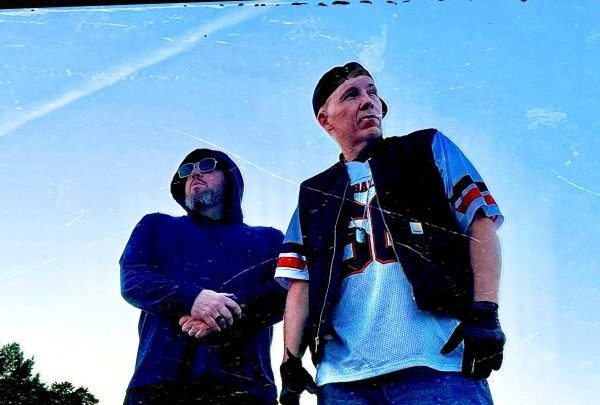
Jasiri X is a registered member of the Nation of Islam and he is an emcee that has full support by the Nation of Islam.
He is also the leader of Mosque #22 in Pittsburgh.
here is a link to one of his songs:
What If The Tea Party Was Black.
http://www.youtube.com/watch?v=ZtH7vH4yRcY
i think the perspective of this article lacks a true understanding of the ideology of the Nation of Islam and its context to what is considered “Traditional Islam”.
Also, any proper cultural analysis requires either: participant observation or an ethnographic study of the focus population. this can only be achieved through direct contact, not hearsay or 3rd parties.
There are many different “worlds” on planet Earth:
We are the aliens.
@futureshock
@Labtekwon
I did not know Jasiri X’s story so it certainly shines new light in terms of being allowed to continue with hip-hop and the NOI. My aim with the article was to call out rappers who exploit certain images without understanding the philosophy behind it. I think it’s wrong for an artist to use the terms of the NOI whilst supporting an entirely different lifestyle. I am sure Jasiri gained the right to share his message in his songs through living what he speaks, wheras some rappers like Young Jeezy seek to use it solely to look cool and further their own financial gain. If a young person thinks Jeezy’s album is reflective of Islam, what kind of Muslim would he grow up to be?
I can’t speak too much about Farakhan or NOI as I don’t believe their movement is a true representation of what most would term “real” or orthodox Islam but one thing I do know as a muslim is that the culture / lifestyle portrayed by rap artists is at direct odds with Islamic teachings and morals.
A large part of what most would term “real” Islamic culture is understood and identified from the main sources of the religion of which there are 2 that are the main: the Qur’an and the sunnah (example, tradition, teachings, guidelines) of the Prophet Muhammad (peace be upon him). The sunnah of the Prophet (pbuh) is collected in hadith narrations which are the equivalent of the gospels, “according to” the particular writers who they were attributed to and were recorded by the companions of the Prophet (pbuh) while he was alive so that everything he said, agreed with, discouraged, practiced etc. was documented. There are narrations from the hadith literature which are testament to the fact that this rap music and the accompanying lifestyle are not acceptable in Islam…
“The love of Qur’an and the love of music can not combine in the heart of a (muslim) believer. One will overshadow the other” – Narrated by Abdullah ibn Masud
Most people from Islamic backgrounds try to justify music but even they should know better. I’m sure even in other monothiestic faith systems, music whether it be rap / hip-hop, r&b, rock is generally impermissible. Commentators of Qur’an put it across as the tool of the devil to divert people’s attention from God. The following verse when translated from the original arabic to english can deduce this understanding:
“‘And excite / incite (to senselessness, befool gradually) whoever you can among them with your (seductive) voice (i.e. songs, music and any other call for God’s disobedience), make assults on them with your cavalry and infantry, mutually share with them wealth and children (by tempting them to earn money illegally, committing adultry etc.) and make promises to them’ But Satan promises nothing but deceit” [Qur’an 17:64]
“I’m sure even in other monothiestic faith systems, music whether it be rap / hip-hop, r&b, rock is generally impermissible.”
Ashraf Nsubuga
this assumption is incorrect.
the monotheistic religions that predate the Qur’an:
The Cult of Aten, Judaism and Christianity;
each include praise and worship using singing, dance and playing of instruments.
all human religions connect to a specific cultural perspective according to their form and function.
no man can effectively make a general statement about all men in any situation:
Shia and Sunni Muslims have very poignant and clear differences in their perspectives of the practice of Islam and the religous texts associated with Islam (Hadith).
So even Islam is not monolithic, with “one” perspective or practice for all.
to each his own.
#FutureShock
it would be important to understand the connection to “prison culture” and how it connects to the religion of Islam for Black men in America.
the context requires much more assessment of factors that apply to even a rapper like Jeezy.
authenticity is a pillar of “gangster rap” and many Black men on the eastcoast of the USA practice Sunni Islam after serving time in prison.
I can also say the impact of these Black men returning to the community as practicioners of Islam, has caused many youth to also practice Islam.
there are more elements that cause this type of phenomenon and it is actually another example of how spirituality is a pillar of the Black community:
regardless of the persons lifestyle.
considering that some rappers have become Satan worshippers:
i welcome the idea of rappers like Jeezy choosing to promote the worship of God.
i think i explained the idea of the dichotomy between what Black people become in our oppression and our identity at our highest elevation.
Tupac’s prayers and Jeezy’s Islam both reflect this idea of a dual reality.
very similar to Robin Hood’s criminal, yet honorable behavior.
#FutureShock